Find Out About Unloading Services

Unloading Tips

You need to decide in advance that in which room you desire to place appliances and furniture before you make any start in the procedure of unloading the moving truck. Also make it sure that you have big enough hallways and door ways that lets you to move your items inside your new residence and then into the rooms.

For a hassle free unloading and unpacking of goods you need to consider that labeling the boxes with their contents and the room they belong to during packing is very important. You can simply place labeled boxes in the room they belong to without opening each of them while unloading. This allows you to be organized.

It is very important to assure that there is a safe pathway from the truck leading to the house and also inside the house. If there is any obstruction or debris then clear it before unloading goods.

Always be cautious or careful when you are about to open rear gates of moving truck as momentum can let packing boxes press on the gates and thus it can fall over you very easily.

Do take inventory of all your items as soon as they are unloaded from the moving truck in order to assure that nothing is broken or lost. If you have hired a moving company then do keep a list of every damaged item during the transit.


How to Find Loading and Unloading Help

Doing it ALL Alone

Did you know that 43% of moves are done by individuals themselves? Did you also know that 95% of those DIY moves result in injury or damage of belongings and private property? This is because most of the time we have a tendency to be a bit lax when handling our own things. Not to mention the lack of respect we have for other people’s things. Hey, we’re not here to judge, if you can do it alone – you should give it a try. Our only suggestions would be, wear a back brace and have someone help you when you’re backing up the truck. Break a leg! No. Sorry, don’t break a leg.

Hiring Professionals

Unless you’ve been under a rock for the last decade or so, you should know that Google or Yelp are good places to start. Read some reviews, look at some photos and find the right fit for you. Most loading and unloading helpers are quick and efficient, not just because they work hard, but because this is their profession –  so they do this all the time. They should also know how to pack and wrap your furniture for the journey, giving you complete security that all your belongings will arrive safely on the other side.


Loading and Unloading Services for Household Moves

Loading a Moving Truck, Trailer or Portable Storage Container

Loading a moving truck, trailer or portable storage container can be the most difficult part of a DIY move. You need experienced moving help to correctly load your household goods to maximize space and prevent damage during transit.

Doing the Heavy Lifting

Loading a moving truck involves a lot of heavy lifting. If you are not prepared, you could easily strain muscles or joints in addition to potentially incurring a serious injury.

Maximize Space

We will pair you with trained movers who know how to maximize the available space to avoid wasting money on an oversized truck.

Experienced Movers are Faster at Loading

Very few of us are in shape to move an entire household in and out of a truck. Loading a portable container or moving truck is hard work and takes a lot of physical labor. Professional movers are already in shape and will load your truck faster than you could.


CAN I HIRE MOVERS TO LOAD AND UNLOAD MY TRUCK?

MAXIMIZE USABLE SPACE

Movers know how to pack and load a moving truck, they are skilled individuals that can puzzle your household goods like a game of Tetris. By hiring professionals you allow yourself to effectively utilize the rented space and potentially reduce the amount you need to purchase

REDUCE DAMAGE

This one goes hand in hand with packing correctly, properly loaded items won’t shift resulting in a lower probability of broken or damaged items.

MOVERS ARE FASTER

A team of professional movers will load or unload your moving truck faster than you and your friends, guaranteed. Spend less time moving your furniture and more time getting to your new home.

SAVE MONEY

If you decide to hire your friends instead of movers you will likely compensating them with pizza and beer. A few pizzas and a couple cases of beer will probably add up quickly and be comparable, if not more, than the cost of hiring movers for a few hours.


Tips for Finding the Best Company to Hire for Unloading and Stockpiling Services of the Products

The unloading and stockpiling of the pipes or steel products are readily available from the best company transportation services; you have to choose them for quality services. You should find the best transportation company for unloading and stockpiling services that has the best team of expert who offers the best services in logistic or planning services for the best services. There should be the best planning of the stockpiling of the products that you have, consider the best company that has qualified personnel for the best services delivery. It is significant to hire the best company for unloading and stockpiling services when transporting the products for you to experience the best services. Finding the transportation company for unloading and stockpiling services is tricky; thus, you have to ensure that you consider the best for reliable services. In this article, there are tips to consider when finding the best company for unloading and stockpiling services of the products this includes.

The analysis is one of the tips to consider when choosing the best company for unloading and stockpiling. You have to find the best transportation company that offers the best unloading and stockpiling services, research to have an idea of the best to choose for quality and reliable services. You ought to analyze to have a hint of the best transport services company that the unloading and stockpiling services of product to their clients to help you choose the best. You have to experience the best unloading and stockpiling services of the products that you have such as the pipes; thus, you have to hire the best company for the quality services delivery.

The price of the unloading and stockpiling services is a tip to consider. You have to know the cost charges for unloading and stockpiling services to help hire the best company that offers transportation services. You should know the cost of the unloading and stockpiling services to help you budget on the expenses that you would incur when hiring the services. You should compare the charges and hire the best transport services company that offer the best unloading and stockpiling services at the best pricing that is fair and affordable.

There is the tip of qualification and experience of the expert for unloading and stockpiling services to view. You have to hire the best transportation company that offers the best unloading and stockpiling services to the clients; you need to check on the qualification and experience to hire the best. The qualified experts have the experience and skill to offer the best unloading and stockpiling services to the client that is fast and more convenient to meet their needs.

More so, there is the tip of the reputation of the best company for unloading and stockpiling services to view when choosing the best. You should find the best transport services company that offer unloading and stockpiling services, review on the reputation to help you hire the best when you need this service.


Choose The Good Electrician For Your House

The Best Tips To Find A Good Electrician

Specific service

Determine the sort of electrician you need, based on the sort of job you want to do at home. Recall that not all electricians can do all kinds of job. Some electrical engineers are specialized in business, residential or new buildings. If the problem involves repairing the board, cables, or satellite installations, you are best placed to choose a master electrician or traveler. Do not employ an apprentice if you understand that your job needs high-level field experience.

Good reference

you’ll understand whether an electrician has an outstanding background or job experience by means of references and reviews. Ask your friends or colleagues for information. You may have employed excellent electricians before, which you can suggest best. You also can check out some internet facilities and look for electricians or read some reviews written about their services by prior clients. Choosing an electrician with a strong background guarantees a quality service.

Experience

Choose an electrician who has experience of the kind of job you want to achieve at home. The recruitment of an electrician without knowledge in the sector can jeopardize your project and further delay.

License and insurance

Check whether or not the electrician is licensed and ask for an up-to-date insurance. You should realize that electrical work can be very dangerous. You can be responsible for any unforeseen occurrences during installation or repair, such as energy shocks and worse, by hiring a non-licensed electrician.

Geographical place

Choose an electrician who lives near your home if possible. Electricians situated close you can react rapidly to home emergencies in comparison with those living throughout the country. Local electricians also have reduced prices to save cash.


Tips for Finding & Hiring an Electrician

Looking for an Electrician for Hire?

Whether you’re doing a home remodel or simply fixing a flickering light, you’re probably looking to hire an electrician. This guide walks you through everything you need to know to confidently hire a licensed professional. You’ll learn about how much electricians charge and why they cost what they do. You’ll understand the difference between an Apprentice, Journeyman and Master Electrician. There are some excellent tips to keep the project cost down while also diving into what projects they do and which you may need a specialist for. Maybe most importantly, you’ll learn what questions to ask your electrical contractor before a job starts and after it ends.

Common Electrical Projects

Every home needs electrical repairs from time to time, but because of the dangers involved, these repairs don’t make safe do-it-yourself projects. Most folks will be better off hiring professional electricians.

How to Hire an Electrician

Knowing how to hire an electrician involves a little reading and research combined with knowing the right questions to ask. Follow these steps before you make that first call.

How Much Does an Electrician Cost Per Hour?

An electrician’s cost per hour comes in between $50 and $100. It’ll vary depending on your location and the type or professional you hire. Areas with a higher cost of living can expect to pay on the higher end of that scale. Licensing level may also increase the price.


tips for finding a safe electrician

Be brave

Don’t be one of the 18 million people too afraid to ask for proof that their electrician is registered. On the legal front, electricians work to the UK national safety standard (BS 7671) and you can search for legitimately registered electricians in your area at Registered Competent Person or, if you live in Scotland, the government’s Certification Register.

Get a reference

Want more proof that your electrician has the skills to back up his claims? Ask to see references from previous (and hopefully happy!) customers.

Err on the side of caution

Make sure to get at least three quotes from different electricians before embarking on major electrical work in your home. It may be time consuming, but worth it in the long run.

DON’T Jump at the lowest price

Got your three (or more) quotes? Thoroughly tempted by the cheapest option? Consider the fact that if it sounds too good to be true, the likelihood is that it is. Shelling out a bit more now may save you later on.

Forget to check…

that everyone working on your premises is qualified to do so, not just the contractor. You need to feel comfortable and assured that every tradesperson working in your home is professionally up to scratch.

Fret

If, after following correct procedures (and these tips), you are still unhappy with the work carried out, get in touch with Trading Standards and Citizen’s Advice. They will be able to help you dispute the issue with your contractor if needs be.


Tips to Help You Choose the Right Electrician

Licensed, Bonded and Insured

There’s simply not enough to be said for the importance of your electrician being correctly licensed, insured, and bonded before they come to perform work at your home. This protects you from unnecessary costs and stress should something go wrong in your home. It also ensures that all the electricians working on your electrics have the proper training to perform safe and effective work.

Who Is On the Team?

Many electricians work as part of a team or company that may be comprised of master electricians, licensed journeyman electricians, or apprentices. In the case of some electrician companies, if they receive too much work, they may subcontract out to other certified electricians to complete work on busy days. It’s good to know exactly who will be attending to your project when you contact the electrician company and being informed beforehand if the owner or primary electrician won’t be visiting your home for the project to avoid any surprises.

Qualifications and Certification

Your electrician must have proper training and adequate experience to provide top service and high-quality results for your electrical repairs and installations. Certified electricians are guaranteed to have at least 3 years’ experience. They can offer a 12-month warranty on their work as proof of quality and competence.

A Good Reputation

Word of mouth has always been a popular way to evaluate a service provider. However, with the widespread availability of the internet, testimonials and reviews are always at our fingertips. If you’ve received a recommendation for a particular electrician, it’s a good metric of their quality and service. You can also find several reviews for electrical contractors on their own website. Or, you can always conduct a search to find more information and reviews of the electrician online.

Get An Estimate

Nothing scares homeowners off calling an electrician more than the fear of excess charges, added costs, and drawn out timeframes. Speaking to a trusted electrical contractor is always free.


Electricians

Finding a home electrician

Most homeowners call electricians in an emergency or if they’re building or remodeling. It’s important to research a contractor and find a skilled electrician before you need one. By building a rapport with an electrician, you can be sure that they will be there to help when you need their services. So, you’ll want to hire an electrician for regular inspections before an emergency takes place. A good electrical contractor will become familiar with your home’s systems and possibly discover emerging problems before they become major situations.

Up-to-date education

A reputable company will require staff to attend regular training courses and stay current on the National Electrical Code, which is amended every three years.

Pulling permits

A permit is usually required in most counties and from the power company any time you’re replacing a home’s main electrical equipment or doing a significant amount of rewiring. The cost of the permit is often included in your electrician’s bill, but be sure to ask. With the permit comes an inspection to ensure the work meets code.

Legitimate licensing

If your state requires electricians to be licensed, check that the license is current. Poor wire connections, overloaded circuits, improper grounding and broken safety elements on an electrical panel are just a few of the problems that can arise from bad workmanship. To check an electrician’s licensing, refer to the Angie’s List License Check tool. You should also protect yourself by verifying the hold the appropriate bonding and insurance, including general liability and workers’ compensation coverage.

Specialization

Since companies specialize in different areas and scopes of work, it’s important for homeowners to hire the right company. If a homeowner only wants to replace outlets and switches, then he or she probably shouldn’t waste time calling commercial electricians that wire large buildings.

Choose The Correct Accountant For Your Company

The Emerging Role (Future) Of Accounting

As man has created from a crude age to a cutting edge relationship age, living has progressed from being substituent as a tracker gatherer to an information driven globalized world idea of ‘viability going to significance’s and from the beginning with this advancement, self bookkeeping with the math device has created through stewardship bookkeeping to budgetary bookkeeping and now administrative bookkeeping; which has an attention on basic leadership.

Evolution of Accounting Theory:

As per investopedia.com, Accounting Theory in the light of its advancement can be characterized as the survey of both recorded establishments of bookkeeping practice just as the manner by which bookkeeping practices are checked and added to the examination and utilization of money related standards. Bookkeeping as a control is accepted to have existed since the fifteenth Century.

From that opportunity to now organizations and economies have kept on developing significantly. Bookkeeping hypothesis must adjust to better approaches for working together, new mechanical gauges and holes that are found in revealing systems thus, it is a ceaselessly developing subject. As expert bookkeeping associations help organizations translate and use bookkeeping guidelines, so do the Accounting Standards Board help constantly make increasingly proficient handy uses of bookkeeping hypothesis.

Bookkeeping is the establishment of productive and viable business the executives and canny administrative basic leadership, without which organizations and exchange worldwide would work indiscriminately and lethally. It is subsequently important to connect how it has advanced to its future job.


Trends Impacting the Future of the Accounting Profession

Advances in technology are taking accounting to new levels. Whether you are a seasoned accounting professional looking to stay on the cutting edge of the industry or an aspiring newcomer, you’ll want to get to know the following major technology trends.

Working in the Cloud

Cloud computing is experiencing rapid growth as new intelligent technologies — such as the internet of things (IoT), artificial intelligence (AI), and machine learning — are integrated into the cloud, according to Forbes. As intelligent technologies progress and more companies move their information to cloud-based systems, accountants need to become proficient in leveraging the cloud to offer clients up-to-date financial analysis and to stay competitive. The future of the accounting profession is looking decidedly cloud-based, as noted in an article by Complete Controller.

Automation of Accounting Tasks

Another example is the use of robotic process automation (RPA) to minimize processing times for audits and contracts down to weeks instead of months, according to the CPA Journal. As Forbes explains, larger firms using RPA AI integration have “increased efficiency and higher-level services,” compared with smaller, non-AI competitors. With automation due to become a major aspect of accountancy, it is crucial that you prepare for the future of accounting by gaining the necessary skills to perform the administrative, managerial, and analytical tasks that technology can’t complete.

The Power of Blockchain

Because blockchain enables users to access ledgers in real time, as well as create smart contracts and record transactions, it’s no surprise the system is catching the notice of accountants. In fact, many accounting firms already implement blockchain, including the Big Four — Ernst & Young, PricewaterhouseCoopers, Deloitte, and KPMG — according to Accounting Today. Accounting professionals who wish to use blockchain will need to be familiar with relevant software programs, as well as how to set up information transfer for ledgers, contracts, and records.


Implications for Research

Big accounting firms are conducting surveys on cloud computing, big data, technological change, new forms of fraud and corruption, and corporate sustainability in order to address the ongoing and future opportunities and challenges facing the profession.

KPMG, for example, has produced survey reports on cloud computing, fraud/corruption/bribery, corporate sustainability, and <IR>.

A growing number of accounting academics are investigating more narrative corporate reporting. A growing number of accounting academics and their PhD students are looking at social and environmental sustainability issues and the associated global frameworks, such as Global Reporting Initiative Standards, <IR>, the UN Global Compact, Social Accountability, and so on. Accounting researchers are organizing some national and international conferences, such as CSEAR and APIRA, to disseminate their findings to the wider community.

Professional accounting organizations, including Chartered Accountants Australia and New Zealand, CPA Australia, and the ACCA (UK) are providing seed funding to academic researchers to investigate issues in line with future economic, technological, social, and environmental changes.

Despite ongoing efforts by professional accounting organizations and academic researchers, there is a surprising gap in research that deals with the changes that will impact accountants and professional accounting organizations. Future research should drive industry collaborations and collaborations between inter-disciplinary academic researchers in order to reveal strategic responses to and pro-active strategies on changes in digital technology, the continued globalization of standards, and new forms of regulation and associated stakeholder expectations.


How Management Accounting Adds Value to the Organization

According to Professor John Hassell of Indiana University’s Kelly School of Business, management accounting adds value to the organization by:

  1. Providing managers with information, such as product costs, budgets and cash flows.  The information includes financial and non-financial data that helps managers with strategic planning and decision-making.
  2. Assisting in directing and controlling, including analyzing and comparing actual performance to budgeted plans and directing attention to highlight successful or problem areas.
  3. Motivating managers to achieve the organization’s goals by communicating the plans, providing a measurement of how well the plan was achieved, and prompting an explanation of deviations from plans.
  4. Measuring performance not only for the entire organization, as in financial accounting, but also for many sub-units, such as divisions, departments and even managers.
  5. Assessing the organization’s competitive position in the rapidly changing business environment, as well as looking at at how well the firm is doing internally, in the eyes of its customers, from the standpoint of innovation and continuous improvement, and financially.

More and more, managerial accounting is used throughout the entire modern business organization via cross-functional management teams, as well as with top executives and personnel from a variety of functional areas, including marketing, production, engineering and operations.


Present role of Management Accountants – Conceptions & Misconceptions

  • Cost and Management accounting system had often become of little importance to managers. Many regarded them as minor routine belonging to the accountants, used to evaluate stocks and prepare monthly results speedily.
  • There are all the obvious things to do: Statutory and Financial accounting, Taxation compliance, Funding, Management reporting and so on. All of this tends to be in the background; it just has to happen in any event. Management Accountants have not yet progressed more towards bridging the gap between managers and accountants and they have yet to concern more with looking towards the future – at where business is going and what is going to happen.
  • Very few conceptual modifications have been brought in, in the cost and management accounting in the last 40 years.
  • Cost is too important to be left to the cost and management accountant.

Tips To Find The Best Family Law Attorney

Tips For Choosing The Best Family Lawyer

Choosing the best family lawyer during your divorce is very important, helping you reach the best outcome, understand the process and make the most appropriate decisions.

The right family lawyer can mean a faster, less expensive and less emotionally taxing process. To make the choice for the best family lawyer, you need to know what to look for.

Here are a few tips to keep in mind when choosing the best family lawyer for you:

Start Looking As Early As Possible

Deciding which lawyer you want to help you through this significant and often difficult life change is not something you want to do in a rush. As soon as you think you might need a family lawyer, start searching for one that suits your needs.

Ask Around or Check Reviews

Approach the search for the best family lawyer as you would the search for any other professional: ask friends and family members whether they know any lawyers that they can recommend.


Interviewing Potential Attorneys

Once you’ve narrowed down your list to a handful of attorneys, you’ll want to meet with each lawyer in person. Be aware that some attorneys charge an initial consultation fee. You should bring relevant divorce paperwork and information to your first meeting with a lawyer. An attorney needs to understand your circumstances to make an accurate assessment of your case.

Any attorney you hire should practice in your local community. Family law cases often require courtroom appearances, and almost all attorneys bill for their travel time. You should also consider how much the attorney charges and whether you can afford it. (To get an idea of what other people have paid in attorneys’ fees, see our survey results on how much divorce lawyers charge and our study on hourly rates charged by family lawyers around the country.)

Ultimately, the attorney you hire should be someone you’re comfortable with. You should like your attorney’s style and general demeanor. A good attorney will explain the process for your case and create a plan that’s tailored for you.


Ask yourself: “Do I like this lawyer?”

You must be able to get along with your lawyer. The initial interview is as much about deciding if you can have a working relationship with your attorney as it is finding out about how the law applies to your case. If the lawyer you are meeting with is abrasive, distracted, disorganized, or acts in any other way that does not give you confidence, consider how you will feel later on in the case if you chose this lawyer.


Who will I be working with?

Will you personally be handling my case, and/or will other attorneys in your office be handling the case? Do you prefer emails or phone calls? What is an expected turn-around time on communication (i.e. how long do I need to wait to get a phone call back if I call?) What about support staff or day-to-day contact? Knowing who to call (or when to call), is important! In most firms, day to day communication will be through the attorney’s paralegal, but the office will know how to get ahold of the attorney if a truly urgent situation pops up. Does the attorney check their own email or does a staff member check them?

What are the major problems you see in my case?

EVERY case has its own problems. If your potential attorney can’t share the bad news with you about your case in the first meeting (such as telling you there are no problems in your case), be concerned. Now – not all problems are serious, and almost all problems can be overcome, some easier than others. For example – uncontested absolute divorce is about as easy as it gets. However, you have to have good service, so a potential minor, but important problem would be if the other side doesn’t want to get served (by a sheriff, by certified mail, etc.). A court cannot grant a divorce if the other side hasn’t been served, so knowing what the costs would be if the other spouse doesn’t “cooperate” in getting served is good to know (before you get a bill).


Make your choice.

The divorce attorney you choose to represent you is local, professional, knowledgeable, responsive and communicates well. This attorney is someone you trust and feel comfortable with. This attorney supports your basic philosophy toward divorce and has a style that works for you. This attorney recognizes the importance of your children and puts them first in the legal process by not making unreasonable child support demands or custody arrangements. This attorney is affordable. Divorce is a highly personal and emotional process, the outcome of which can have a significant impact on your life. This is an important decision, and there are no guarantees in this process. However, if you follow these steps, you’ll find the right one — the one who listens to what you want, advises you well and has your best interest at heart.

Tips How To Apply Laminate Flooring

How is Laminate flooring made and how do I protect my new Laminate floor?

Laminate flooring is very durable and not that hard to keep clean. All you have to do is regularly sweep or vacuum with a soft brush. Damp mop the laminate wood floor using a bit of ammonia or vinegar and water being careful not to flood the work panels as you can damage them this way. Some products that are not recommended for your laminate floor are soaps, scouring powder, floor polish or steel wool as these may damage the laminate wood flooring. Always test a product that you are unsure of in a low visible area. If you have to remove a stain use the recommended laminate floor cleaner and mop up to keep any water from entering the joints. Also make sure you use a damp mop and not a wet one.


The Basics of Laminate Care

Dirt is the primary enemy of laminate flooring and leads to fine scratches that can make the floor look dull and used. The best way to clean laminate floors is to use ammonia and water, or vinegar or any other window cleaning product. First sweep or vacuum up loose dirt, then mist the floor with your cleaner and a mop. Later, buff it up using a terry cloth towel. Microfiber pads are also quite effective and help you avoid cleaning fluids. Also, check the manufacturer’s recommendation for cleaning procedures. Some of them make their own laminate floor cleaners.

Here are some helpful tips to keep your laminate flooring as good as new:

  • Use a vacuum cleaner with a soft flooring attachment, a broom, a slightly damp cloth or mop to remove dirt, grit and debris.
  • Add glides or cushion protectors under chairs and table legs to prevent possible scratching.
  • Put floor mats and foot brushes at all outside doorway entrances to keep away dirt.
  • Damp mop using warm water for a better evaporation rate.
  • When mopping, change water as necessary to keep clean.
  • While damp mopping, avoid any standing fluids on the floor – including your pet’s water bowl. Do not saturate the floor and wipe up spills immediately.
  • Do not use floor polish or wax products. This leaves a film on the floor and causes it to attract more dirt and leave streaks and footprints.
  • Avoid soap-based and abrasive cleaners, scouring powder, citrus oil products and steel wool as they affect the floor’s décor layer and damage the finish.
  • Never sand, lacquer, or refinish your laminate flooring surfaces.

Advanced Tips for Laminate Care

Cleaning spots on laminate flooring can be a bit tricky. Here are some tips on spot cleaning:

  • To remove oil, paint, permanent marker, tar and rubber heel marks, use a neutral cleaner on a clean light colored cloth. Alcohol or a nail polish remover containing acetone can also be used.
  • To remove blood, juice, wine, beer, soda pop and pasta sauce stains; warm water can be used. If needed use a neutral cleaner with a light colored cloth.

To remove candle wax or chewing gum, first harden with ice and then scrape very gently. Wipe the rest with warm water and a clean cloth.


How to Protect Your Laminate Flooring

Taking proactive measures to protect laminate flooring and care for your floors will help extend their life and keep them looking beautiful for years to come. Laminate floor care doesn’t have to be hard! Here are some laminate floor care instructions and tips:

Protection with pads and rugs

Attach protective pads to the furniture – furniture is one of the main causes of damage to the flooring. Moving them from one place to another, without lifting, creates a condition for the appearance of long lines. Experts advise attaching protection pads to their feet to avoid unpleasant scrubbing or scratches, as daily tables, chairs and stools are moving in the room and other rooms.

Place bedding in front of the doors

You probably noticed beautiful and interesting bedding in the homes of relatives and friends that give a different look to the entire interior. They have a dual function here – visual and protective. If, with the entry, all passers-by step directly onto the laminate, this may be a problem.

Replace the plastic wheels with rubber

It may sound a little crazy and too engaging, but replacing the wheels of frequently moving furniture will save you from replacing the floor in the whole room. Chairs are the ones that move most often, though not everyone can change. Do it mostly with heavier and massive chairs, like office chairs you use for desks.


Limit Excess Moisture

Moisture can make your laminate planks expand and contrast. If you live in a humid climate or have limited air conditioning, it’s recommended to measure your humidity levels regularly. The ideal level is between 35% and 65% humidity. More than that might cause your floors to warp or get damaged.

You should also protect against excess moisture on the floors. If you spill any liquid, clean it up right away. Puddles of water can cause your floors to buckle and warp too.

After cleaning, always do a thorough job of wiping down your flooring. Leaving excess water sitting on top of your laminate is a recipe for disaster – and not just for your floors. In addition to putting your floors at risk for moisture related damage, you might also cause someone to slip and fall.


Laminate Floor Mistakes and How to Fix Them

Vacuuming and Sweeping

Laminate floors need to be swept or vacuumed often to keep them clean. Dirt is an enemy to laminate since it scratches and dulls the finish of the floor. However, sweeping or vacuuming improperly can do more damage to your laminate than the dirt. If you use a vacuum cleaner, be sure to turn the brush roll off to avoid scratching the surface of your floor. For sweeping, a clean microfiber dust mop can be more gentle on the floor than bristle

Furniture Damage

Beautiful furniture can compliment a beautiful floor. But to protect that floor, the furniture needs a little addition. Furniture pads on the bottoms of heavy furniture will protect the floor from scuffing and gouging. If the pads on the bottoms of your furniture are worn down or missing, they can be replaced inexpensively by a quick trip to a home improvement store.

Streaks

One of the biggest complaints about laminate floors is that the floors are streaky even after mopping. To remedy this, try a different cleaner or use less cleaner. Remember water and a tiny bit of glass cleaner is more than enough to get the floors clean. You can also buff the floors dry with an absorbent towel after you are done mopping. Some floors are more prone to streaking than others, but these tips should help.

Choose Loading Services The Right One

Labor Alternatives to Hiring a Full Service Moving Company

Need to hire labor assistance?

Moving.com has partnered with HireAHelper to find the best local moving labor professionals to move all of your stuff onto and off of the moving truck. All you have to do is enter your zip code and your moving date. From there, the moving labor website allows customers to compare and book available labor professionals in the area. To find discounts and information on various rental truck companies, check out Moving.com’s truck rental center.

Enlisting friends

Of course, there’s always the old-fashioned do-it-yourself move with friends. For those looking to save big bucks on their next relocation, this may be the best option – especially if you have some pretty strong buddies.

Truck rental add-ons

If you’re planning to hire the help of moving labor professionals, you’re most likely renting a moving truck as well. Fortunately, most rental truck companies also offer loading and unloading services directly through their websites. For instance, U-Haul partners with Moving Help (mentioned above) to find local laborers in the area and Budget Truck Rental partners with HireAHelper. Make sure to check with your specific rental truck company to see what labor options are available for your next move. These services are usually included in the “add-ons” section of your rental truck’s website and can be purchased while reserving the moving truck.

Moving Help

Similar to HireAHelper, Moving Help provides customers with an online marketplace to search and locate local moving services in their area. These services include packing, unpacking, loading, unloading, cleaning and driving assistance. The website also ranks all Moving Helpers based on the company’s star rating. Customers can read unedited customer comments and assess ratings about each and every Moving Helper before making their selection. This way you can easily find the most reliable and well-reviewed labor service at the touch of a button.

College Hunks Hauling Junk and Moving

College Hunks Hauling Junk and Moving is a licensed and insured moving and junk removal service. The Tampa-based company offers junk removal services, donation pickups, packing help, residential and commercial moving, and moving labor assistance nationwide. The company points out that many of their customers actually combine these services when moving. However, if you’re only looking for someone to assist with heavy lifting and single item moves, College Hunks also offers a simple hourly labor option. These moving labor professionals are described as “seasoned veterans” that will ensure every belonging is properly packed, sealed and loaded.


Quick Guide to Loading Your Belongings

Loading Tips and Resources

While packing is the first line of defense against moving damage, the second is properly loading items in the equipment. Get started with answers to some FAQs, and then see step-by-step instructions for loading items safely and securely.

How Much Help Will I Need?

Depending on the size of the home and how much time you want to spend, you’ll want to have 1-3 extra people on hand to help load. Not only will it take some of the work off your shoulders, but it will also make the process more efficient. Ask a few people to remain on the truck while others are carrying items. These people can work on stacking everything, and nobody has to stop bringing things from the house!

What Should I do Before the Equipment Arrives?

There are a few things you’ll need to take care of before the big day. One of the biggest is to measure large pieces of furniture and find the best door to use when moving them. You’ll also need to clear an obstacle-free route from the door to the moving equipment, and put protective covering on the floors. Finally, be sure to set aside any items you’re taking with you, so they don’t get loaded by mistake.

What Should I Wear?

Safety is a big factor when choosing what to wear while loading belongings. Avoid clothing that may get snagged while carrying furniture out of doorways, and always wear durable, supportive footwear with a good grip. You’ll also want to put on leather gloves when handling large, heavy objects with sharp edges.

How Do I Move Heavy Items?

Whether you’re carrying an item or using a moving dolly, there are a few rules to follow. Prevent injury by lifting with your legs, not your back. And don’t be afraid to ask for help! A good rule of thumb is to keep boxes under 40 pounds so they can be lifted safely.


Learn 4 Exclusive Tips How To Get The Best Freight Load Quote

Know The Specifications Of Your Cargo

Freight does come in many forms and packages, starting from pallets up to multi-box loads. Thereupon, with the aim of getting the best freight load quote you will have to know the correct specifications of your cargo.

Make Sure You Choose The Best Transportation Process

Deciding where to get the best freight quote is equally as important as deciding on the best type of transportation process for your freight. There are several options when it comes to shipping freight that you can choose from, which is why we made a list of the main types of freight providers.

Get Multiple Transportation Offers

Choosing the best freight shipping company requires taking into consideration many facts and figures. Therefore, before making the final decision you will have to make a detailed check of each company starting from their equipment up to reviewing their transportation history.

Ask a Friend To Refer a Company

Besides the above-mentioned methods of choosing reliable, efficient and cost-effective ship freight, one that is shown to really work is asking a friend that has a previous experience recommend you a company. Finding the most suitable shipping service that will meet your requirements is the best way to achieve your goals and your friends might bring you one step closer to achieving that goal.

Final Thoughts

To enumerate, getting the best freight load quote is often negotiated with trucking companies, which is why it is extremely important to get opinion from people that have expertise and years of experience in the shipping industry before making the final decision.


Best Free Load Boards for Truckers

Many new truckers start their businesses by looking for loads on line. Load boards have advantages because they let you find loads quickly and effectively. It’s an easy way to get the business rolling. Since new truckers often have tight budgets, using a free service is a good way to get some loads and save some money.

Load boards that have free trial memberships

Additionally, we are including a list of load board that offer free trial memberships. They allow you to try the service for free, for a limited time, and determine if they are a good fit for your trucking business.

Are free load boards worth it?

Many owner-operators ask themselves if load boards are worth it for truckers. This question is difficult to answer. Load boards certainly have some value as a tool to get your business started and get things moving. They are easy to use and relatively inexpensive.

Finance slow-paying loads

One of the challenges of operating a trucking carrier is dealing with shippers and brokers that don’t offer quick-pays. Slow-paying loads can affect your ability to run and grow your business. You can improve your cash flow by financing freight loads. This financing helps you pay for fuel, repairs, and other expenses.


Must-Know Tips for Moving Out of State

Secure Housing and Employment Before Moving Out of State

While it might not always be possible, moving out of state after you have a job lined up will take a huge load off. How do you find a job across the country? If possible, reach out to friends and family who live in your new area. You can also use job sites such as Indeed and Glassdoor to find openings and LinkedIn to leverage your network. If moving day rolls around and you don’t have a job waiting for you, that’s okay. Just be sure you’ve saved up at least 3 months’ worth of living expenses to cover you in the meantime.

Craft a Master Plan for Moving Out of State

Before you begin your moving research process, create a high-level master plan of how you’ll organize your move. Figure out how much money you can spend max while moving out of state. Can you transport any of your belongings in your own car or rental truck, or will you leave everything to professional movers? If you’re planning a DIY move, you’ll want to look into the cost of renting a moving truck. Request a Penske truck rental quote for estimates on pricing.

Pare Down Your Stuff Before Moving Out of State

Take inventory of everything that you’ll bring to your new place, being sure to focus on the things you really need, like your dishes and a bed frame. Moving out of state can get very expensive very quickly, so you’ll want to keep costs under control by only moving these necessities.

Budget Everything for Moving Out of State

Hey, moving locally is expensive, never mind moving out of state, so you’ll want to save money wherever you can. Whether you’re using recycled packing materials or scheduling your move on a day with lower moving estimates, sticking to a budget will be a big help as you’re moving out of state. To keep track of both your budget and your expenses, create a master spreadsheet of all of your moving-related costs so you’ll be prepared to make the payments when you need to.

Decide Between a Professional or a DIY Move

The most common deciding factors between hiring a professional moving company and taking on a DIY move are cost and convenience. Once you have your budget ready to go, you’ll be able to decide fairly quickly whether you can afford to hire a moving company or if a DIY move is a better option.

Find The Best Home Inspection

Tips to Find the Best Home Inspector

Ask if the inspector can do ancillary inspections. If your home has a septic system, for example, or if foundation problems are common in your area, ask ahead of time if the inspector can do those inspections and if there will be an extra fee.

Get copies of license and insurance documents. Many, though not all, states require home inspectors to be licensed. Some municipalities may also require licensing. A qualified home inspector will provide copies of his or her license and proof of insurance.

Ask what won’t be included and how to find out the condition of those items. In colder climates, for example, the roof, deck, patio, driveway and other exterior features can’t be inspected when they are covered with snow.

Ask if the inspector is a member of ASHI, NAHI, InterNACHI or any other professional inspectors group. Choosing an inspector who belongs to a professional organization isn’t a guarantee of quality, but it does indicate a degree of professionalism and training.

Read reviews on Angie’s List, Yelp and Google. You can ask inspectors for references and call past clients. But you should also read online reviews that the inspector doesn’t control to ensure accuracy.


How to Choose a Home Inspector

Ask What You Get for the Price

Inspectors without specialized credentials typically charge around $300 to $1,000, depending on the home’s location and size, the inspector’s experience, and the scope of the inspection itself.

Consider Training and Experience

In addition to professional certifications, look for someone who has been in the field inspecting homes for at least several years. He’s more likely to have seen a variety of home types and a broad range of home issues.

Compare Home Inspection Reports

The best way to determine how thorough an inspector will be—and how well he will communicate the problems he finds—is to ask for a sample copy of an inspection he has done on a home like the one you’re considering buying, Brasler says. “The sample report will show how much work they’re going to do,” he says.

Favor Credentials, but Know Their Limits

Hiring someone who’s certified by a professional organization can give you a bit more assurance that the inspector is knowledgeable.

Identify Qualified and Trusted Candidates

To find a reputable inspector, first ask friends who have recently purchased a home whether they recommend the person they used. You can also find referrals through local online communities such as NextDoor or Patch, where members sometimes post their experiences. A crowdsourced directory such as Yelp, and home services sites such as Angie’s List and HomeAdvisor, may also be helpful.


Tips for Getting the Most out of a Home Inspection

Don’t Forget the Basement

An unfinished basement will give a lot of clues to the condition of the house and foundation. Look for cracks, signs of repairs and water issues. A crack in the slab or wall is not always a dealbreaker, but understanding why a crack appeared is important. Your home inspector will be able to tell you if anything needs further inspection from a structural engineer.

Furnace and Water Heater

Beyond making sure the furnace and water heater work properly, you should find out how old each one is and the last time each received service. Replacing a furnace or water heater can be pricy, so if either one is in need of replacing soon, you need to keep that in mind while putting together your offer on the property. You can also get a feel for how the furnace is cared for by checking the furnace filter. A filter that’s in obvious need of changing can hint at other postponed or ignored maintenance.

Give the Plumbing a Try

Losing water pressure or dealing with a slow drain can be indicators of larger plumbing issues. Make sure bathtubs and shower pans are leak-tested. And have the home inspector inspect the water main and shutoff points (very useful knowledge if/when you take ownership of the property).

Look in the Attic

A well-functioning attic is crucial to protecting a home. If your home inspector can get into the attic without trampling insulation, you can often learn a lot about the home and any renovations or repairs. One very common inspection red flag is improper venting of bathroom fans into the attic (and not extending the vent all the way through the roof). If your bathroom fan is venting directly into the attic, all it’s doing is sending moisture and humid air into the attic where it cause mold, rot or worse. It’s also not up to code. If possible, have your inspector check for attic air leaks. While you can fix these attic air leaks, an attic with air leaks could have potential issues with insulation, moisture, mold or worse.

Test GFCIs

GFCI outlets are part of the building code in rooms where moisture is present (kitchen, bathroom, laundry room, etc.). Your inspector will know how to test these outlets properly, and malfunctioning or non-working GFCI outlets could hint at bigger electrical problems.


How to Choose a Home Inspection Company

Be prepared for bad news. It is a home inspector’s job to find any existing or potential problems with a house. They can lose their license if they fail to report issues, so although it might feel like they’re purposely giving bad news, be thankful for the information.

Know what will be inspected. A home inspector must thoroughly conduct a review of the inner and outer areas of a house, including:

Plumbing: While conducting a home inspection, old piping materials, faulty fixtures, water pumps and water heaters are some of the concerns that an inspector will focus on. Plumbing defects are one of the main issues a homeowner and/or buyers will face in terms of repairs.

Understand the actual inspection. Home inspectors enter a home and analyze all of the major components that make up a house purchase. Home inspection companies document the safety and overall condition of a home at the time of the inspection. Home inspections usually take about 3 hours for a minimal inspection, and 5 or 6 hours in order to arrive at a thorough, proper assessment. Depending on how old or large a house is, it may take longer or less time to complete.

Be prepared for the cost. The average fee for a home inspection is between $350-$500, but the information received from an inspector is priceless. It could be the turning point between a sale and a buyer going back to searching for the perfect home.


Finding the Right Home Inspector

What to expect on inspection day

On the day of the inspection, the inspector performs an initial site evaluation. Then the inspector takes you on a tour to point out the assets as well as any potential problems. Pay attention, watch, ask questions and learn. A thorough inspection can find problems related to water entry, roof leaks, insect infestation, unsafe wiring, failed septic systems, poor plumbing, wet basements, mold and mildew, and safety hazards.

At the end of the inspection, you receive a written report detailing all the findings. The report should contain photographs and descriptions of any damage or defects found during the inspection as well as details on the location of damage. Pictures help you understand the scope and location of the damage, and visual proof makes it easier to get repair estimates.

Tips To Make Home Remodelling For Old House

What Are the Initial Steps in a Home Remodeling Project?

Starting a home renovation can be overwhelming, especially if you haven’t completed one before. Whatever the project, your remodel will involve so many details it can easily become daunting.

Use these steps and tips for planning a home remodel to choose how to order, prioritize and build a detailed home project plan that will help reduce your stress level while keeping you on budget and on schedule.

How to Plan a Remodel in 5 Steps

Build a Detailed Home Improvement Project Plan

The first step in a remodeling project is to develop a plan that clearly states the goal for your renovation and includes designing inspiration and an outline of the work that needs to be completed.

Your project plan should also include:

  • Blueprints or sketches of your finished project.
  • A list of needs and wants for your project.
  • Project steps divided into DIY steps and steps that will require a professional.


Be Realistic

The second step is to find out what is actually possible so you won’t hit snags that can put an end to the project halfway through. Especially for more extensive renovations, you should get a structural engineer to take a look at your home and see if the structure will support what you have in mind. You also need to find out what the local laws and bylaws are, whether you’ll be allowed to make the changes you want to make and which permits you need to obtain.

Do the Financial Prep Work

The third step is getting the money in place for your renovation project. Renovations are unique and its best to meet with a financial advisor for individual advice.


Interview contractors.

Contractors are frequently brought into the process once a final schematic design has been selected. Usually there is at least a general idea of how the home will look from the outside, a dimensioned floor plan and some preliminary material selections. With this much information, it’s possible to provide preliminary estimates of cost.

Contractors are often asked to estimate the schematic design as part of the interview process. It may take a couple of weeks to set up the interviews and generally at least two to three weeks after interviews to receive the estimates. Altogether it could take four to six weeks to interview candidates and receive estimates. After that you may want to call references, visit jobsites or do additional research before making a decision about the contractor you will hire..

Shop for Contractors and Materials

Allow yourself one to two months to choose everything. While you are shopping for tile and hardwood floors, your architect or designer will finalize construction drawings, work with a structural engineer on how the project will be built and put in the details required for permitting. If it all goes well, you will work on this step and the previous one concurrently and finish at the same time.


Develop Detailed Home Remodeling Plans or House Plans

After documenting your high level home remodeling or house plan objectives, you can now get down to work fleshing out all of the details. This includes specifying the actual dimensions of all the rooms in your home remodeling or house plans, as well as specifying the myriad of details such as lighting and flooring choices and their locations, appliance makes and models, cabinets, plumbing fixtures, paint colors, interior trim styles and colors, and even landscape items when applicable.


Build a Timeline

Once you have your budget and team in place for your remodeling plan, it’s time to put together your timeline. First, choose a desired start date, or if you’re hoping to have it completed by a specific date, work backward from that date instead. Sit down with your contractors to determine the length of time each portion of the project will take. Discuss which steps of the remodel need to be completed first, how long they will take and which project portions can be completed concurrently.

Additionally, be sure your timeline:

  • Includes time to clean out the project area.
  • Allows for the shipping and delivery of materials.
  • Accounts for any holidays your contractors may take off.

Choose The Best Materials Of Your Tile Roof

TIPS ON HOW TO CHOOSE THE BEST COLOR FOR YOUR ROOF TILES

The Color To Be Energy Efficient:

The roof color plays a significant role in turning the house highly energy-efficient, so considering the fact you will be in a position to save on your utility bill. The lighter shade of the roof will reflect the heat better keeping the interior comfortable. If you choose a darker shade for your tile roof then it will absorb the heat faster turning the interior too much hot. You will make use of cooler or HVAC systems more to stay comfortable. This will thereby be increasing your electricity bill just because of the color of the roof. The roofing companies in Phonix can assist you in choosing the right color shade to help you in saving on utility bills without disturbing the aesthetic beauty of the property exterior. Colors like white, beige, light bronze, peach or light blue can reflect heat and light better.

Common Trends Of The Neighborhood Houses:

Besides personal aesthetic sense, you need to take into consideration the colors of the roofs of the neighborhood houses. If all have a similar pattern of color then its safe to go with the same color. On the other hand, you can make a little bit change in the shade or pattern of coloring the tiles of the roof to make your house stand apart from the rest without turning an eyesore.

The Appearance Of The House:

Many are not aware that the use of dark with light colors create a magical impact on the appearance of the home exterior. When you have a light-colored roof it will make the house appear taller than actual and will be an ideal option when the house is having a low roof or a shallow looking pitch. Contrasting, using a darker color will make the tall roof appear less overwhelming.

Style Of The Home:

The roof color or better to say the roof tile color that you will be selecting for your roof need to match your overall home style. Select the color taking into consideration all elements of the exterior design of the home, for example, the color of doors, windows, walls, landscape, frames of doors, balcony grill, etc. One thing that you need to keep in mind is that the color of the tiles will stay for several years and so even if you don’t like the color after a year and so, it will cost you big to change. Select the shade which will please your eyes long and keep complimenting the beauty of the house externally. There needs to be a cool balance between the roof color and the color of the rest sections of the house exterior. Take suggestions from roofing services in Arizona experts and compare color samples to pick the right shade for the roof. We will suggest you check the samples in the various time slot of the day. This will give an idea of how it looks under a bright light in the afternoon, semi-dull in the morning and when the sun is about to set.

Paint Quality:

It is one of the key factors to consider when you begin the search for the perfect color for your roof. Your search should target high-quality paint perfect for applying on the tile roof and the one that can serve you long. There are various companies which are manufacturing a wide range of color paints for the flat roof tiles to select from. You can seek the assistance of the roofing contractors to help you choose the right quality and shade of paint for the roof. The paint should be the one with acrylic resin which can block the ultraviolet light. This will help to protect the roof from premature fading, corrosion, peeling, rust as well as water infiltration. Ask for the paint warranty period before you buy it, it is better to go with the one with the maximum warranty period. Check the reviews of the paints online for getting more ideas on quality roof paints.


Tips in Choosing The Best Roof Tile For Your Home Extension

Popularity of Roof Tile for Home Extension Returns

Today, its popularity is again taking hold thanks in part to a renewed interest in old-fashioned aesthetics. If you’re contemplating investing in roof tile for home extension purposes, it pays to educate yourself on the best roof tiles available, to suit your specific needs.

Here is a quick guide to picking roof tile for home extension purposes:

Pricier doesn’t always mean better – you’ll be tempted to invest in extremely pricey roofing tiles with the general presumption that the most expensive ones last longer, or that they require less maintenance, but don’t be fooled! More often than not, mid-priced roofing tiles and even ones that are downright dirt-cheap are just as hardy as the over-priced ones, and investing in them won’t empty your pockets.

Learn to pick good ‘quality’ mid-priced tiles versus expensive ones, your wallet will thank you for it.

Pick the right tile for your climate – if you live in a tropical climate, don’t pick roofing tiles that are made from rock, since these tend to trap and collect heat, but do not diffuse it as well as other materials. Opt instead for clay, terra cotta, or ceramic tiles which are more ideal for tropical environments. If you live in a place that has its fair share of sunny days and cold spells, investing in tiles made from rocks like shale or limestone will be worth your while.

Combine functionality and aesthetics when picking roofing tiles – the shape of roofing tiles aren’t there for mere aesthetics; it too also serves a very practical purpose. Slatted and curved tiles are perfect for climates that undergo regular bouts of rain, but dead-flat tiles are far more ideal for places which experience regular snowfall.


Tips in Choosing the Perfect Roof Colour and Texture for your New Home

Create the perfect contrast.

Take a look at your home design. If there are too many colours, patterns, and textures everywhere else such as different coloured brick or cement wall, textured stone façade in various shades, then your roof tiles must have a smooth or flat surface and come in a monotonous shade to look its best. Composite roof, slates, and asphalt shingles fit this design profile. A home with simpler features and toned down colours like white washed walls, smooth monochrome brick, can stand out with complex styles, playful textures, and richer colours. Clay, concrete, and wooden shingles may also be used to achieve this look.

Complement colours, not match them.

Many homeowners make the horrible mistake of choosing a roof colour with the exact same hue as the siding or exterior walls. You wouldn’t want your new home to look boring, would you? That is why you should pick complementing colours instead.

The secret lies in the theme.

One of the best tips in choosing the perfect colour and texture for your new home is to go with a particular theme. You can never go wrong with orange clay tile roofing for a Mediterranean house, or an olive green slate roof for a French Country home. If your house doesn’t have a specific theme that requires a certain colour scheme, then a neutral roof is a safe choice.

Observe roof samples under bright light.

If you’re lucky enough to get your hands on roof samples, examine them under bright light. You may also want to place the sample roof tile beside samples of sidings and walls. This gives you a more accurate estimate of what your home would look like once the roof is installed.

Consider climate conditions.

Black shingle roofs with plywood sheathing have the tendency to store heat and make a home ten degrees warmer. Unless you live in an area with cool climate, it is advisable to stay away from them and opt for other darker shades such as brown or gray. These lighter colours have no effect on indoor temperatures.


What Are the Main Types of Roofing Tiles?

Concrete Tiles

Concrete tiles can be a good alternative to ceramic tiles as they are less prone to breakage and look similar to ceramic tiles. Concrete tiles are made from a mixture of cement, sand, and water. The result is a tile that is very heavy, easy to install and less expensive than slate tiles.

Bituminous Tiles

Bituminous tiles are among the lightest and easiest to install. They are made of fiberglass and covered with basalt chips or granite on top. They can be installed by any roofer since they only require an adhesive to fix them to the roof.

Composite Tiles

Composite tile roofing is a multi-layered tile that comprises of acrylic, metal, and stone. The demand for such tiles is soaring as the need for a more natural appearance continues to increase. Composite tiles look similar to slate and clay tiles but are lighter than stone and concrete tile.

Polymer-Sand Tiles

Polymer-sand tiles are made from mixing sand and binding them with polymers. They are considered to be the most suitable alternative to the use of ceramic tiles. They look similar to ceramic tiles but they are more durable and less likely to break.

Ceramic Tiles

Ceramic tiles are known for their fireproofing abilities and to some extent their durability. They exclusively used in Southwestern and Spanish style homes but now they are almost everywhere. They come in different shapes, sizes, and colors which makes them ideal for a wide range of homes.


Tips in Choosing The Best Roofing Materials

In choosing the best roofing material for your home, it is advisable to familiarize oneself with the various roofing materials that are available in the market before deciding to keep the same type of roof that needs to be replaced or get another kind of roofing material. Make sure that the new roofing can withstand all types of weather and can last longer than most. The roof slope is also one factor that needs to be considered when deciding on a new roofing material.

After considering on a material’s durability and longevity, consider the appearance as the roof covers your house. The roof is very visible on the street so it is best to find the roof material that would dramatically affect the appearance of your home. Find one that matches with the design, color, texture and material of your home to create an awesome finish to your home’s exterior look. If the style of your house is Spanish style then find a roof that is consistent with the design of your house.

The cost of roofing material greatly affects your choice. The asphalt-fiberglass shingles are the most popular material and they are affordable to buy and to install. Wood shingles are a little bit more expensive than asphalt shingles and so are the clay tiles. Typically, the higher the cost of the material, the higher is the cost of labor so take a pick of the most affordable roofing materials to get more savings both in the material and installation.

A roofing material’s durability is significant especially if you intend to stay in the same house for a long time. Find a material that lasts longer than most. One piece of advice, invest in a material that is more durable and lasts longer to reduce the cost of installation and the inconvenience that goes with the replacement of roof.

Use Drywall Repairs Metode To Fis Your Wall

How To Repair Drywall in Simple Steps

Drywall is relatively simple to install and easy to repair. It’s also easy to repair badly, which can leave a lumpy mess that declares “shoddy” to anyone who enters the room.

SAFETY FIRST

Watch The Weight

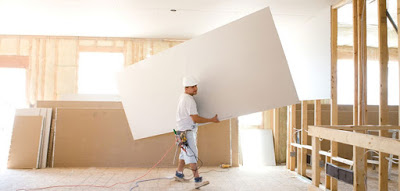
If you have several large repairs to do and you’ll be buying a sheet or two of drywall, be advised that a sheet of regular 1/2-in. drywall weighs about 1.7 pounds per square foot. That means a 1/2-in. 4 x 8-ft. sheet weighs a bit more than 54 pounds (a 3/8-in. sheet weighs almost 45 pounds). If you stand it on edge and it falls over, someone–especially a child–could get hurt.

Beware Of Buckets

Five-gal. compound buckets pose a drowning or suffocation hazard to small children–when they are new and filled with compound, or later after they are cleaned and used for car washing and other jobs.

Clean Up The Dust

It also bears mentioning that drywall sanding dust is a respiratory irritant. Wear a dust mask when sanding to block airborne gypsum and silica particles. Also, spread a plastic dropcloth nearby. Wipe dust off the dropcloth with a damp sponge, then clean the surrounding areas with a shop vacuum, let the air settle, and finish vacuuming with your household vac.


Here’s how to repair a hole in drywall:

  1. Buy all the tools you need (listed below).
  2. Prep the hole by clearing debris and smoothing the edges.
  3. If it’s a small hole, fill it with spackle and let it dry.
  4. If it’s a large hole, measure and cut a piece of repair patch or mesh tape to cover the hole. Then, completely cover the patch with spackle and let it dry.
  5. Sand the area until it’s flat and smooth.
  6. Paint over the area you just repaired so it looks like nothing ever happened.


What Tools Are Needed for Drywall Repair?

Need to repair damaged drywall in your home? Use our drywall tools list to get the job done right. It examines the six essential drywall tools you will need.

  1. Hawks and mud pans

A hawk is a large square sheet of metal supported by a center handle. Mud pans resemble meatloaf pans and have crisp, sharp edges. These tools are used to carry the drywall compound with you while you work. Hawks are the tool of choice for professionals, so they tend to cost a little more. A mud pan will work nicely for occasional repairs.

  1. Knife

Plaster repair requires the right kinds of knives. Putty knives range in size from two inches across to more than a foot. The size you need depends on how large a repair you are doing. Nail holes are easily patched with a narrow knife, but larger work over seams or big holes will require a wider blade.

  1. Sandpaper

You cannot do a proper patch job with sandpaper. A sanding block is OK, but actual paper with a special hard sanding pad is better. If you will be working on higher areas, invest in a sanding board that you can put an extension on.

  1. Sanding sponge

Sanding drywall produces a ton of dust. Small jobs can be finished with a sanding sponge. Used along with a bucket of water, the sponge will eliminate concerns about drywall dust. They should be used with care, however, to avoid removing too much of the compound.

  1. Corner tools

Inside corner tools are perfect for finishing off the difficult area in the corner of a room. It will speed up the process of finishing a stretch of drywall. However, it’s not typically required for repairs around the house.

  1. Tape

Large repairs, like cracks or seams, should be fixed using tape. The tape will prevent the crack from reappearing and can easily be blended in with the wall. Holes can be covered using special sheets of self-adhesive mesh.


How To  Repair Small Holes In Drywall

Instructions

  1. Place the self-adhesive mesh patch over the hole.
  2. Use a drywall knife to cover the patch with lightweight joint compound in a crisscross pattern, feathering the edges so it blends with the wall. To feather the edge, increase pressure and angle on the drywall knife as you reach the outer edges of the patch area to minimize, or thin, the joint compound on the drywall.
  3. Let the patch dry and apply a second coat of compound if needed. Sand smooth.


Give it the Old College Try

If the hole is smaller than 1/4 inch, the first weapon in your quick fix arsenal should be toothpaste — preferably the same shade as your wall. Simply squeeze the paste into the hole, and then use a putty knife (or playing card) to scrape off the excess. Try to get the paste as flush as possible with the wall. The toothpaste might shrink a bit when it dries, so a second application may be needed.

If the toothpaste trick doesn’t appeal to you, another quick fix is to crush up an aspirin into as fine a powder as you can manage, mix the powder with just enough water to form a paste, and then use that to fill the hole. It’ll work in a pinch, but the toothpaste method is a lot easier